Black kite
Amazing fact
Black kites sometimes hover above fires to catch insects.
University of Michigan Animal Diversity Web
No sign-up needed. You can save notes on this device.
An illustration based on the real animal.
A little discovery to share.
Black kites sometimes hover above fires to catch insects.
THE REAL WORLD
The real Black kite
- Scientific name
- Milvus migrans
- Japanese name
- トビ
- Group
- Birds
- Class
- Aves
- Order
- Accipitriformes
- Family
- Accipitridae
- Genus
- Milvus
A common member of the hawk family, seen from waterside areas to the mountains. It calls 'pee-hyororo'.
Its tail is shaped like the plectrum used to play a shamisen, and it looks square-cornered when spread.
It often eats dead fish and animals, so it is sometimes called the 'cleaner'.
How the Black kite lives
It catches prey with sharp talons. It flaps slowly and sometimes forms groups. Populations breeding in northern regions generally migrate south for the winter.
University of Michigan Animal Diversity Web日本野鳥の会 BIRD FANBasic data
- Size
- Total length: 59–69 cmWingspan: 157–162 cm日本野鳥の会 BIRD FAN
- Diet
- Fish, insects, frogs, snakes and other small animals国土交通省 山国川河川事務所
- Range
- Kyushu and areas to the north日本野鳥の会 BIRD FAN
Where the Black kite has been recorded
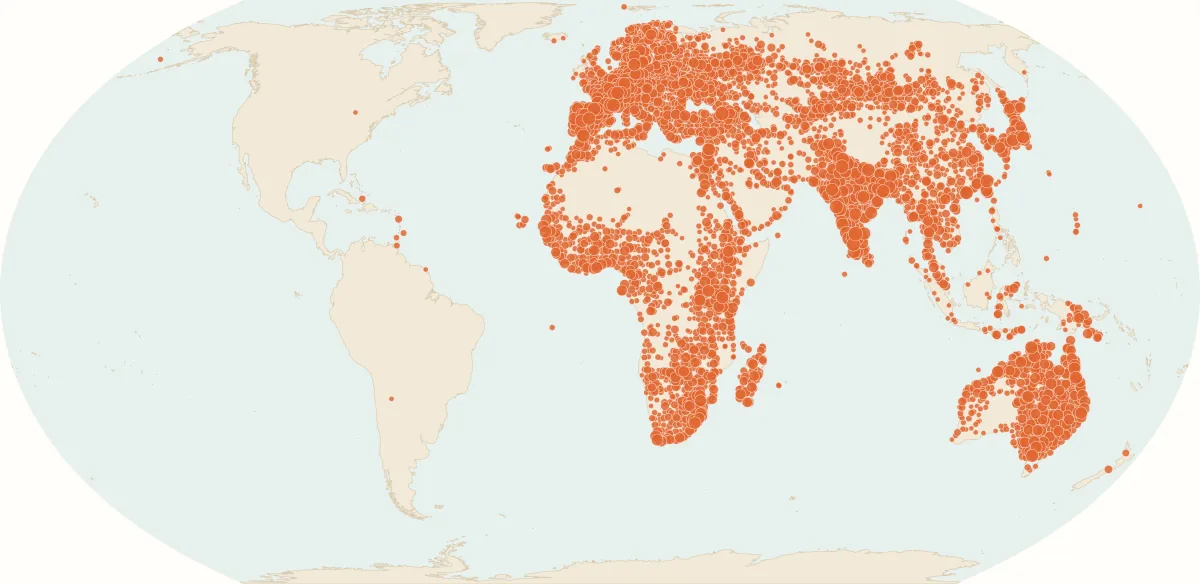
Records: GBIF.org (CC0 and CC BY 4.0 records, retrieved 2026-11-07). Map: Natural EarthSee the records on GBIF
Watch wild animals from a distance. Do not touch or feed them, and take care of the places where they live.
Names around the world
- 日本語
- トビ
- 简体中文
- 黑鸢
- 繁體中文
- 黑鳶
- 한국어
- 솔개
- Español
- Milano negro
- Français
- Milan noir
- Deutsch
- Schwarzmilan
- Português (Brasil)
- Milhafre-preto
- Italiano
- Nibbio bruno
- हिन्दी
- काली चील
- العربية
- حدأة سوداء
- Bahasa Indonesia
- Elang paria
- Tiếng Việt
- Diều hâu đen
- Русский
- Чёрный коршун
- Türkçe
- Kara çaylak
- ไทย
- เหยี่ยวดำ
- বাংলা
- ভুবন চিল
- اردو
- کالی چیل
Names come from Wikidata and iNaturalist records. Where a language has no recorded name, we use the scientific name.
Sources and how we check
- 日本野鳥の会 BIRD FAN — トビChecked: 2026-11-03
- 国土交通省 山国川河川事務所 — 山国川の鳥図鑑 トビChecked: 2026-11-03
- 島根県 — 法吉の鳥類(自然観察モデルコース 松江市法吉地区)Checked: 2026-11-03
- University of Michigan Animal Diversity Web — Milvus migransChecked: 2026-11-03
We check each fact against its source. The illustrations simplify how the real animal looks.
The classification (class, order, family, genus) follows Wikidata records, checked against GBIF. Classifications can change as research goes on.
The basic data are the values given in each source. They vary with how the animal is measured, whether it is male or female, and whether it lives in the wild or in captivity.
This page was translated from the original Japanese with the help of AI.
Report a mistakeRELATIVES
Others in Accipitridae


MORE TO MEET


