Puma
Amazing fact
A puma hides large prey under leaves and debris and returns nightly to eat.
University of Michigan Animal Diversity Web
No sign-up needed. You can save notes on this device.
An illustration based on the real animal.
A little discovery to share.
A puma hides large prey under leaves and debris and returns nightly to eat.
THE REAL WORLD
The real Puma
- Scientific name
- Puma concolor
- Japanese name
- ピューマ
- Group
- Land mammals
- Class
- Mammalia
- Order
- Carnivora
- Family
- Felidae
- Genus
- Puma
It lives from southern Canada to South America, in forests and in many other places from wetlands to mountains.
How the Puma lives
It is primarily active at night. It quietly stalks large prey and leaps onto its back from close range. Dense vegetation, caves and rocky crevices provide shelter.
University of Michigan Animal Diversity WebBasic data
- Size
- Head and body length: 100–200 cm
- Weight
- 70–100 kg
- Lifespan
- about 15 years, about 20 years in captivity
- Diet
- Deer and wild pigs
- Range
- Southern Canada to South America
Where the Puma has been recorded
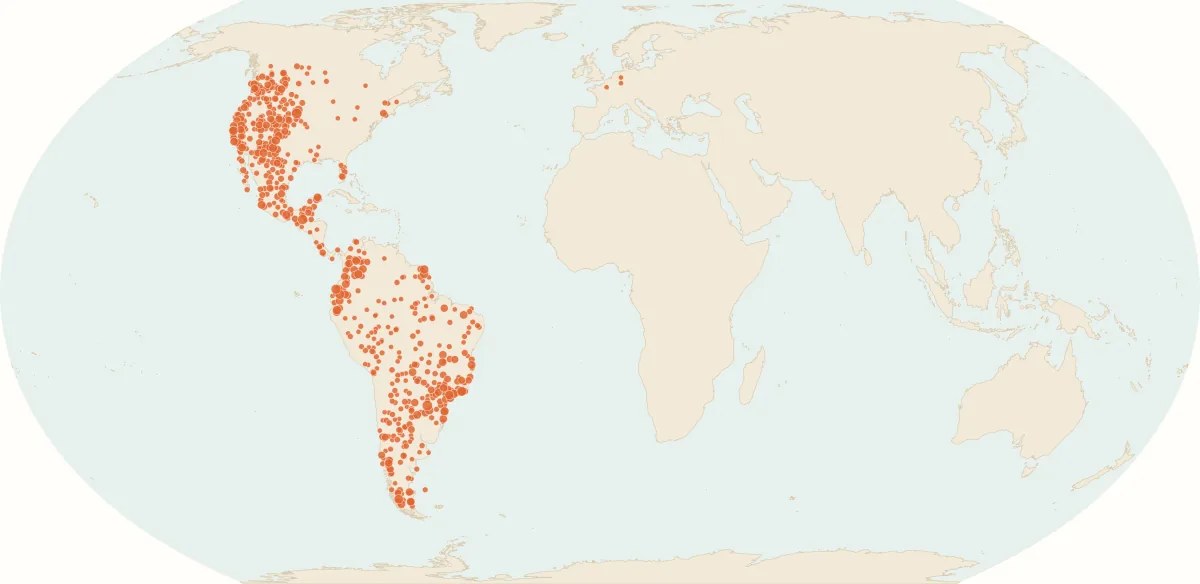
Records: GBIF.org (CC0 and CC BY 4.0 records, retrieved 2026-11-07). Map: Natural EarthSee the records on GBIF
Watch wild animals from a distance. Do not touch or feed them, and take care of the places where they live.
Names around the world
- 日本語
- ピューマ
- 简体中文
- 美洲金猫属
- 繁體中文
- 美洲金貓屬
- 한국어
- 퓨마
- Español
- Puma
- Français
- Cougar
- Deutsch
- Silberlöwe
- Português (Brasil)
- Suçuarana
- Italiano
- Puma
- हिन्दी
- कूगर
- العربية
- أسد الجبال
- Bahasa Indonesia
- Cougar
- Tiếng Việt
- Báo sư tử
- Русский
- Пума
- ไทย
- เสือพูมา
- বাংলা
- কুগার
Names come from Wikidata and iNaturalist records. Where a language has no recorded name, we use the scientific name.
Sources and how we check
- 日本平動物園 — ピューマChecked: 2026-11-03
- University of Michigan Animal Diversity Web — Puma concolorChecked: 2026-11-03
We check each fact against its source. The illustrations simplify how the real animal looks.
The classification (class, order, family, genus) follows Wikidata records, checked against GBIF. Classifications can change as research goes on.
The basic data are the values given in each source. They vary with how the animal is measured, whether it is male or female, and whether it lives in the wild or in captivity.
This page was translated from the original Japanese with the help of AI.
Report a mistakeRELATIVES
Others in Felidae


MORE TO MEET


