Japanese giant salamander
Amazing fact
The Japanese giant salamander breathes through its wrinkled skin.
Smithsonian National Zoo
No sign-up needed. You can save notes on this device.
An illustration based on the real animal.
A little discovery to share.
The Japanese giant salamander breathes through its wrinkled skin.
THE REAL WORLD
The real Japanese giant salamander
- Scientific name
- Andrias japonicus
- Japanese name
- オオサンショウウオ
- Group
- Amphibians and reptiles
- Class
- Amphibia
- Order
- Caudata
- Family
- Cryptobranchidae
- Genus
- Andrias
In Japan, hybridisation with introduced Chinese giant salamanders has occurred.
How the Japanese giant salamander lives
It is active at night and usually sleeps under stream rocks by day. It rapidly opens and closes its mouth to suck in prey. It normally walks along the stream bed to move around.
University of Michigan Animal Diversity WebBasic data
- Conservation status in Japan
- Vulnerable (VU)Ministry of the Environment of Japan, 5th Red List (2026)
Where the Japanese giant salamander has been recorded
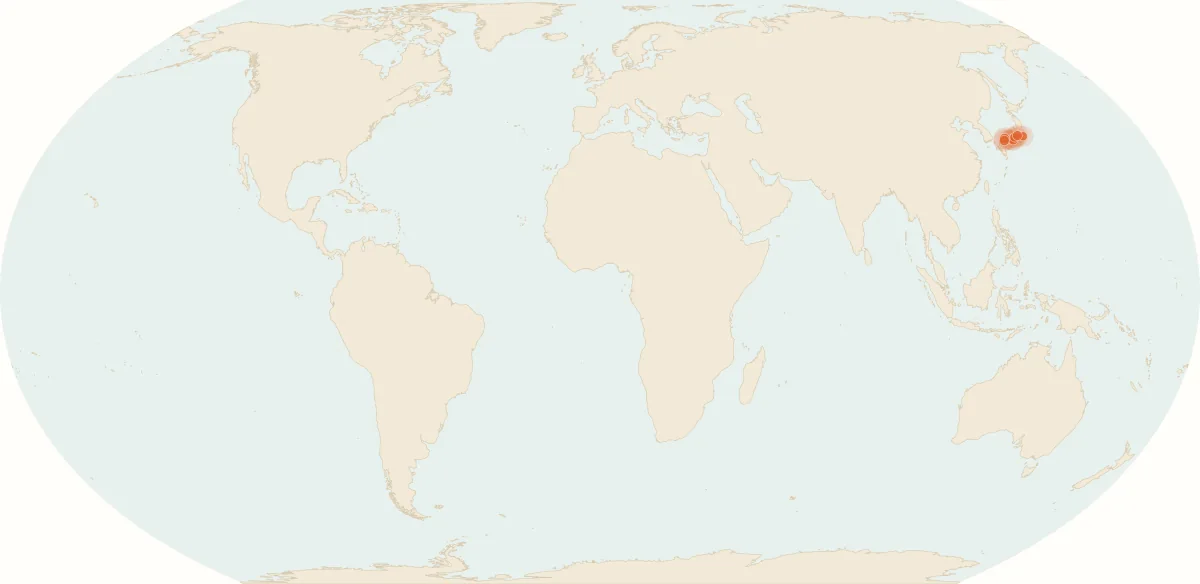
Records: GBIF.org (CC0 and CC BY 4.0 records, retrieved 2026-11-07). Map: Natural EarthSee the records on GBIF
Watch wild animals from a distance. Do not touch or feed them, and take care of the places where they live.
Names around the world
- 日本語
- オオサンショウウオ
- 简体中文
- 日本大鲵
- 繁體中文
- 日本大鯢
- 한국어
- 일본장수도롱뇽
- Español
- Salamandra gigante japonesa
- Français
- Salamandre géante du Japon
- Deutsch
- Japanischer Riesensalamander
- Português (Brasil)
- Salamandra-gigante-do-japão
- Italiano
- Salamandra gigante giapponese
- العربية
- سلمندر عملاق ياباني
- Bahasa Indonesia
- Salamander raksasa jepang
- Tiếng Việt
- Kỳ giông khổng lồ Nhật Bản
- Türkçe
- Dev Japon semenderi
Names come from Wikidata and iNaturalist records. Where a language has no recorded name, we use the scientific name.
Sources and how we check
- 環境省 レッドリスト・レッドデータブック — オオサンショウウオChecked: 2026-11-03
- University of Michigan Animal Diversity Web — Andrias japonicusChecked: 2026-11-03
- Smithsonian National Zoo — Japanese giant salamanderChecked: 2026-11-05
- Ministry of the Environment of Japan, 5th Red List (2026)Checked: 2026-11-07
We check each fact against its source. The illustrations simplify how the real animal looks.
The classification (class, order, family, genus) follows Wikidata records, checked against GBIF. Classifications can change as research goes on.
The conservation status in Japan is the category in the Red Lists of the Ministry of the Environment of Japan, which assess the risk of extinction for wild animals in Japan.
This page was translated from the original Japanese with the help of AI.
Report a mistakeWhen you meet the Japanese giant salamander, look for this
- Look for the small eyes on top of its flat head.
Animals do different things from day to day, so you may not always see this.
University of Michigan Animal Diversity WebEXHIBIT INFORMATION
Places that keep or show the Japanese giant salamander
Zoos, aquariums and other places whose official websites say they keep or show this animal.
Chubu
Kinki
- 京都水族館同館は交雑個体なども飼育しているため館内表示で種を確認
Displays can change with the animals’ health and the seasons. Check each facility’s official website before you go.
RELATIVES
Others in Caudata


MORE TO MEET


