Japanese night heron

No sign-up needed. You can save notes on this device.
An illustration based on the real animal.
A little discovery to share.
Japanese night herons lay eggs in nests built in trees.
THE REAL WORLD
The real Japanese night heron
- Scientific name
- Gorsachius goisagi
- Japanese name
- ミゾゴイ
- Group
- Birds
- Class
- Aves
- Order
- Pelecaniformes
- Family
- Ardeidae
- Genus
- Gorsachius
A summer visitor that flies from Southeast Asia to Japan in spring. It lives in mountain woods and wetlands.
Its body is mottled brown and white. When it senses danger, it stretches its neck straight up and blends in with the branches, looking like a bowling pin.
It eats small creatures found near water, such as crustaceans and reptiles. The male and female raise their chicks together.
Basic data
- Size
- Total length: about 40 cm
- Diet
- Small waterside animals such as crustaceans and reptiles
- Range
- Japan, Taiwan, and the Philippines
- Conservation status in Japan
- Near Threatened (NT)Ministry of the Environment of Japan, 5th Red List (2026)
Where the Japanese night heron has been recorded
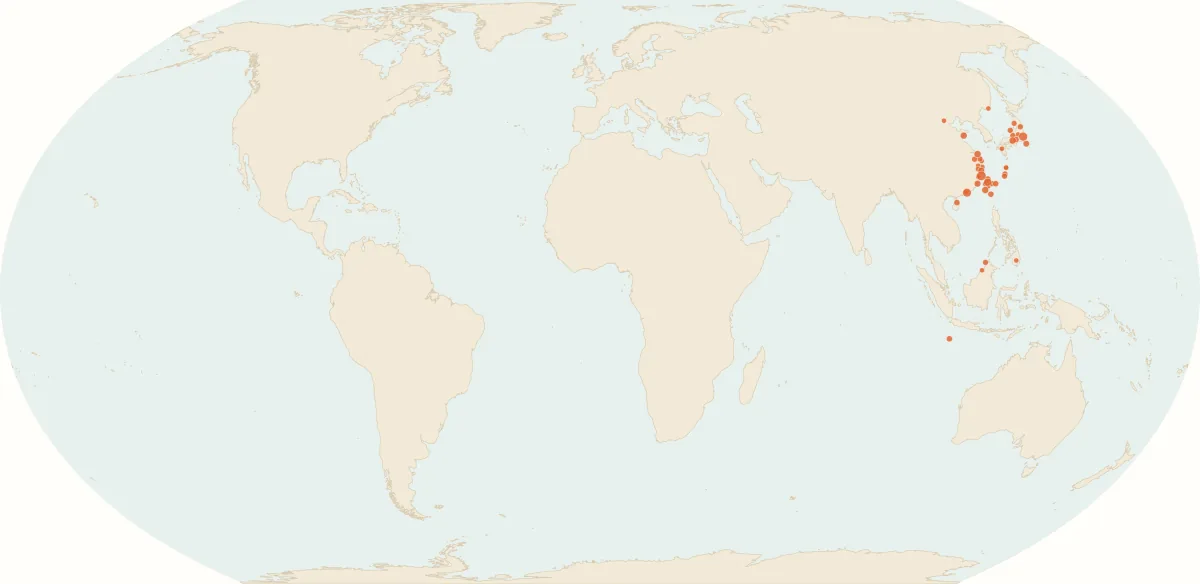
Records: GBIF.org (CC0 and CC BY 4.0 records, retrieved 2026-11-07). Map: Natural EarthSee the records on GBIF
Watch wild animals from a distance. Do not touch or feed them, and take care of the places where they live.
Names around the world
- 日本語
- ミゾゴイ
- 简体中文
- 栗头鳽
- 繁體中文
- 麻鷺
- 한국어
- 붉은해오라기
- Español
- Martinete japonés
- Français
- Bihoreau goisagi
- Deutsch
- Rotscheitelreiher
- Português (Brasil)
- Savacu-japonês
- Italiano
- Nitticora giapponese
- العربية
- بلشون الليل الياباني
- Bahasa Indonesia
- Kowak jepang
- Русский
- Японская кваква
Names come from Wikidata and iNaturalist records. Where a language has no recorded name, we use the scientific name.
Sources and how we check
- 井の頭自然文化園 — ミゾゴイChecked: 2026-11-03
- Ministry of the Environment of Japan, 5th Red List (2026)Checked: 2026-11-07
We check each fact against its source. The illustrations simplify how the real animal looks.
The classification (class, order, family, genus) follows Wikidata records, checked against GBIF. Classifications can change as research goes on.
The basic data are the values given in each source. They vary with how the animal is measured, whether it is male or female, and whether it lives in the wild or in captivity.
The conservation status in Japan is the category in the Red Lists of the Ministry of the Environment of Japan, which assess the risk of extinction for wild animals in Japan.
This page was translated from the original Japanese with the help of AI.
Report a mistakeEXHIBIT INFORMATION
Places that keep or show the Japanese night heron
Zoos, aquariums and other places whose official websites say they keep or show this animal.
Kanto
Displays can change with the animals’ health and the seasons. Check each facility’s official website before you go.
RELATIVES
Others in Ardeidae


MORE TO MEET


