Little egret
Amazing fact
In their breeding colors, little egrets have red toes and red areas in front of their eyes.
新潟県
No sign-up needed. You can save notes on this device.
An illustration based on the real animal.
A little discovery to share.
In their breeding colors, little egrets have red toes and red areas in front of their eyes.
THE REAL WORLD
The real Little egret
- Scientific name
- Egretta garzetta
- Japanese name
- コサギ
- Group
- Birds
- Class
- Aves
- Order
- Pelecaniformes
- Family
- Ardeidae
- Genus
- Egretta
A smallish white heron that lives around water, such as rivers, ponds, rice paddies, marshes and tidal flats.
Its bill and legs are black but its toes are yellow, so it looks as if it is wearing shoes.
It sometimes shakes its toes in the water to drive fish out of their hiding places and catch them.
How the Little egret lives
In Niigata Prefecture, they live in many areas throughout the seasons. Their calls include a “gaa” sound. They breed in colonies that also include other herons. In summer plumage, they have long plumes at the back of the head.
新潟県Basic data
- Size
- Total length: 55–65 cmWingspan: 90–105 cm
- Diet
- Fish
- Conservation status in Japan
- Vulnerable (VU)Assessed as Egretta garzetta garzettaMinistry of the Environment of Japan, 5th Red List (2026)
Where the Little egret has been recorded
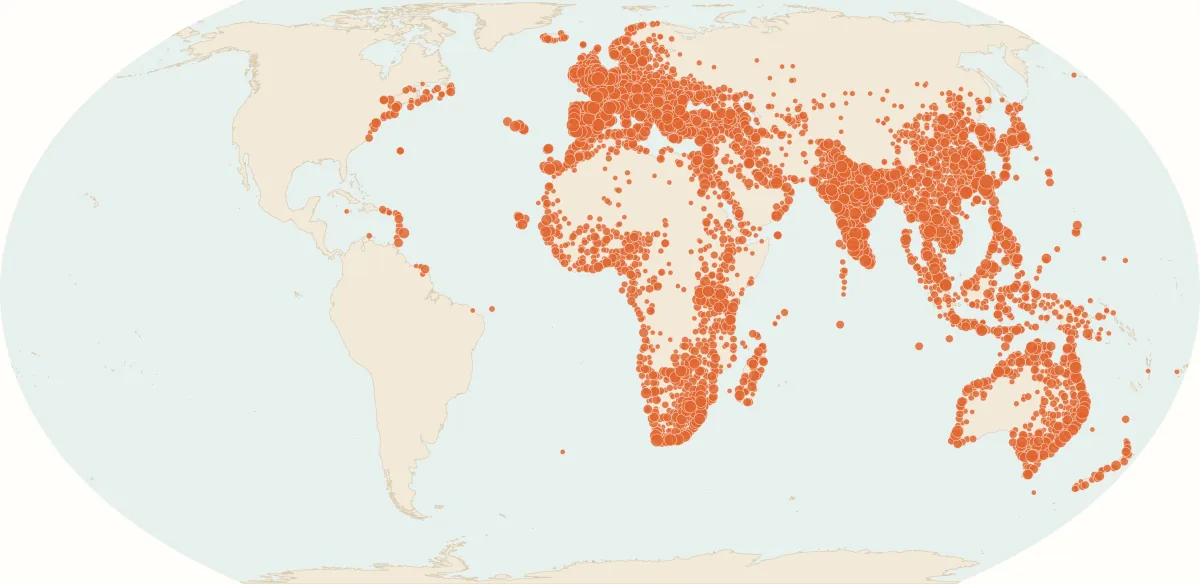
Records: GBIF.org (CC0 and CC BY 4.0 records, retrieved 2026-11-07). Map: Natural EarthSee the records on GBIF
Watch wild animals from a distance. Do not touch or feed them, and take care of the places where they live.
Names around the world
- 日本語
- コサギ
- 简体中文
- 白鹭
- 繁體中文
- 小白鷺
- 한국어
- 쇠백로
- Español
- Garceta común
- Français
- Aigrette garzette
- Deutsch
- Seidenreiher
- Português (Brasil)
- Garcinha-branca
- Italiano
- Garzetta
- العربية
- سنقيل
- Bahasa Indonesia
- Kuntul kecil
- Tiếng Việt
- Cò trắng
- Русский
- Малая белая цапля
- Türkçe
- Küçük ak balıkçıl
- ไทย
- นกยางเปีย
- বাংলা
- ছোট বগা
Names come from Wikidata and iNaturalist records. Where a language has no recorded name, we use the scientific name.
Sources and how we check
- 新潟県 — 展示鳥類剥製(コサギ)Checked: 2026-11-03
- RSPB — Little EgretChecked: 2026-11-03
- Ministry of the Environment of Japan, 5th Red List (2026)Checked: 2026-11-07
We check each fact against its source. The illustrations simplify how the real animal looks.
The classification (class, order, family, genus) follows Wikidata records, checked against GBIF. Classifications can change as research goes on.
The basic data are the values given in each source. They vary with how the animal is measured, whether it is male or female, and whether it lives in the wild or in captivity.
The conservation status in Japan is the category in the Red Lists of the Ministry of the Environment of Japan, which assess the risk of extinction for wild animals in Japan.
This page was translated from the original Japanese with the help of AI.
Report a mistakeRELATIVES
Others in Ardeidae


MORE TO MEET


