Great egret
Amazing fact
Great egrets fly with their necks tucked in and legs stretched behind them.
観光庁 地域観光資源の多言語解説文データベース
No sign-up needed. You can save notes on this device.
An illustration based on the real animal.
A little discovery to share.
Great egrets fly with their necks tucked in and legs stretched behind them.
THE REAL WORLD
The real Great egret
- Scientific name
- Ardea alba
- Japanese name
- ダイサギ
- Group
- Birds
- Class
- Aves
- Order
- Pelecaniformes
- Family
- Ardeidae
- Genus
- Ardea
A big, all-white egret. Its long, strong bill is black in the breeding season and yellow at other times.
Using its long, S-curved neck, it catches fish, frogs and other water animals on tidal flats, in rice paddies and in marshes.
It moves slowly, standing still until prey comes close, then catches it with its dagger-like bill.
How the Great egret lives
They feed during the day. Besides fish and frogs, they eat crickets and grasshoppers. At dusk, they gather at communal roosts.
University of Michigan Animal Diversity WebBasic data
- Size
- 84–94 cm
- Diet
- Fish, frogs and other aquatic animals
Where the Great egret has been recorded
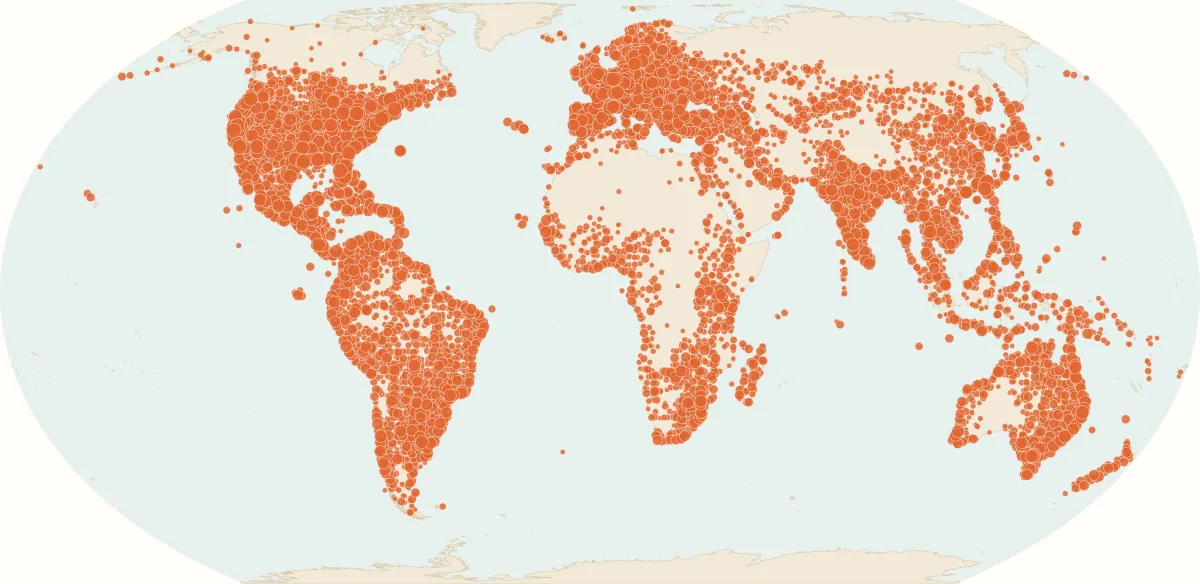
Records: GBIF.org (CC0 and CC BY 4.0 records, retrieved 2026-11-07). Map: Natural EarthSee the records on GBIF
Watch wild animals from a distance. Do not touch or feed them, and take care of the places where they live.
Names around the world
- 日本語
- ダイサギ
- 简体中文
- 大白鹭
- 繁體中文
- 大白鷺
- 한국어
- 대백로
- Español
- Garceta grande
- Français
- Grande aigrette
- Deutsch
- Silberreiher
- Português (Brasil)
- Garça-branca-grande
- Italiano
- Airone bianco maggiore
- हिन्दी
- Chennarai
- العربية
- البلشون الأبيض الكبير
- Bahasa Indonesia
- Kuntul besar
- Tiếng Việt
- Cò ngàng lớn
- Русский
- Большая белая цапля
- Türkçe
- Büyük ak balıkçıl
- ไทย
- นกยางโทนใหญ่
- বাংলা
- বড় বক
Names come from Wikidata and iNaturalist records. Where a language has no recorded name, we use the scientific name.
Sources and how we check
- 観光庁 地域観光資源の多言語解説文データベース — サギとシラサギChecked: 2026-11-03
- University of Michigan Animal Diversity Web — Ardea albaChecked: 2026-11-03
We check each fact against its source. The illustrations simplify how the real animal looks.
The classification (class, order, family, genus) follows Wikidata records, checked against GBIF. Classifications can change as research goes on.
The basic data are the values given in each source. They vary with how the animal is measured, whether it is male or female, and whether it lives in the wild or in captivity.
This page was translated from the original Japanese with the help of AI.
Report a mistakeRELATIVES
Others in Ardeidae


MORE TO MEET


