Pig-nosed turtle
Amazing fact
Pig-nosed turtles use sensory receptors in their nose to locate prey.
University of Michigan Animal Diversity Web
No sign-up needed. You can save notes on this device.
An illustration based on the real animal.
A little discovery to share.
Pig-nosed turtles use sensory receptors in their nose to locate prey.
THE REAL WORLD
The real Pig-nosed turtle
- Scientific name
- Carettochelys insculpta
- Japanese name
- スッポンモドキ
- Group
- Amphibians and reptiles
- Class
- Reptilia
- Order
- Testudines
- Family
- Carettochelyidae
- Genus
- Carettochelys
Where the name “Pig-nosed turtle” comes from
The English name means a turtle with a pig-like nose and refers to its nose shape.
University of Michigan Animal Diversity WebHow the Pig-nosed turtle lives
They spend most of their time in the water. Adults eat flowers, fruits and leaves found along riverbanks. In the dry season, they may gather in pools left as river levels fall. During the wet season, they are found in deep, murky water.
University of Michigan Animal Diversity WebBasic data
- Range
- New Guinea and northern Australia
Where the Pig-nosed turtle has been recorded
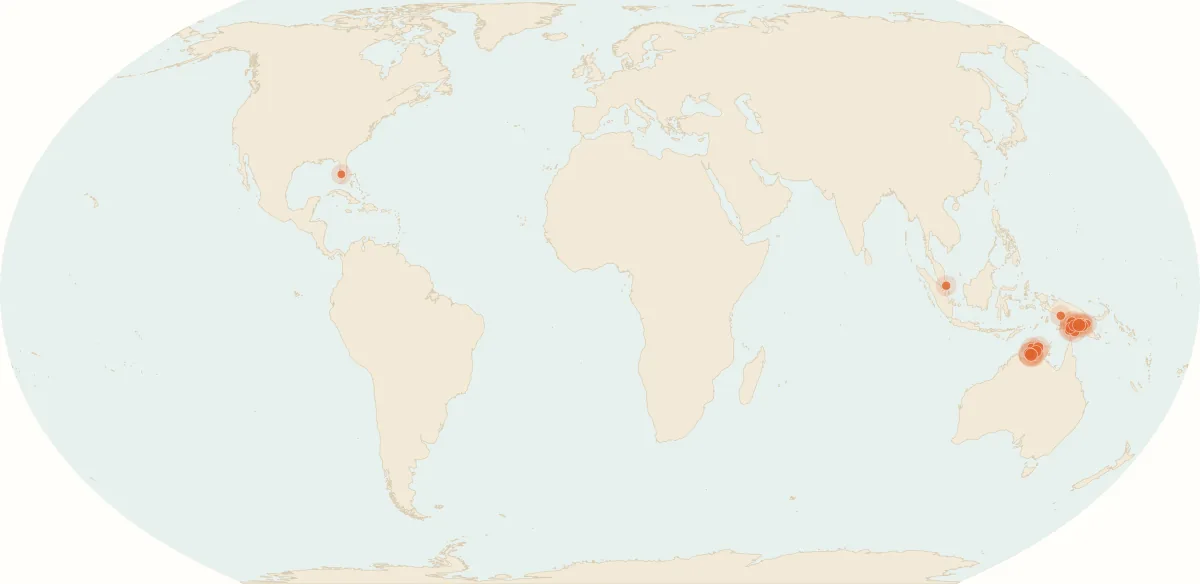
Records: GBIF.org (CC0 and CC BY 4.0 records, retrieved 2026-11-07). Map: Natural EarthSee the records on GBIF
Watch wild animals from a distance. Do not touch or feed them, and take care of the places where they live.
Names around the world
- 日本語
- スッポンモドキ
- 简体中文
- 猪鼻龟
- 繁體中文
- 豬鼻龜
- 한국어
- 돼지코거북
- Español
- Tortuga boba papuana
- Français
- Tortue à nez de cochon
- Deutsch
- Papua-Weichschildkröte
- Italiano
- Tartaruga naso di porcello
- العربية
- سلحفاة ذات أنف الخنزير
- Bahasa Indonesia
- Labi-labi moncong babi
- Русский
- Двухкоготная черепаха
- Türkçe
- Domuz Burunlu Kaplumbağa
- ไทย
- เต่าบิน
Names come from Wikidata and iNaturalist records. Where a language has no recorded name, we use the scientific name.
Sources and how we check
- 鳥羽水族館 — スッポンモドキChecked: 2026-11-04
- University of Michigan Animal Diversity Web — Carettochelys insculptaChecked: 2026-11-06
We check each fact against its source. The illustrations simplify how the real animal looks.
The classification (class, order, family, genus) follows Wikidata records, checked against GBIF. Classifications can change as research goes on.
The basic data are the values given in each source. They vary with how the animal is measured, whether it is male or female, and whether it lives in the wild or in captivity.
This page was translated from the original Japanese with the help of AI.
Report a mistakeRELATIVES
Others in Testudines


MORE TO MEET


