Striped skunk

No sign-up needed. You can save notes on this device.
An illustration based on the real animal.
A little discovery to share.
Striped skunk babies already have stripes before their fur grows.
THE REAL WORLD
The real Striped skunk
- Scientific name
- Mephitis mephitis
- Japanese name
- シマスカンク
- Group
- Land mammals
- Class
- Mammalia
- Order
- Carnivora
- Family
- Mephitidae
- Genus
- Mephitis
Where the name “Striped skunk” comes from
Its genus name comes from a Latin word meaning “bad odor”.
University of Michigan Animal Diversity WebIt lives across much of North America and eats all sorts of things, from rodents to insects, fruit and grain.
It is famous for its smelly farts, but the smell really comes from a liquid made by glands on both sides of its bottom, which it sprays at enemies to defend itself.
How the Striped skunk lives
They go out to find food at dusk and at night. They dig insects and grubs out of logs with their long front claws. By day, they shelter in places such as abandoned dens of other mammals. In winter, females may share a den to keep warm.
San Diego ZooUniversity of Michigan Animal Diversity WebBasic data
- Size
- Head and body length: 33–45 cm上野動物園
- Weight
- 0.7–2.5 kg上野動物園
- Lifespan
- up to 7 years in the wild, up to 10 years in captivityUniversity of Michigan Animal Diversity Web
- Active
- At night (nocturnal)University of Michigan Animal Diversity Web
- Diet
- Rodents, insects, fruit, grains, and other foods上野動物園
- Range
- Southern Canada through the United States to northern Mexico上野動物園
Where the Striped skunk has been recorded
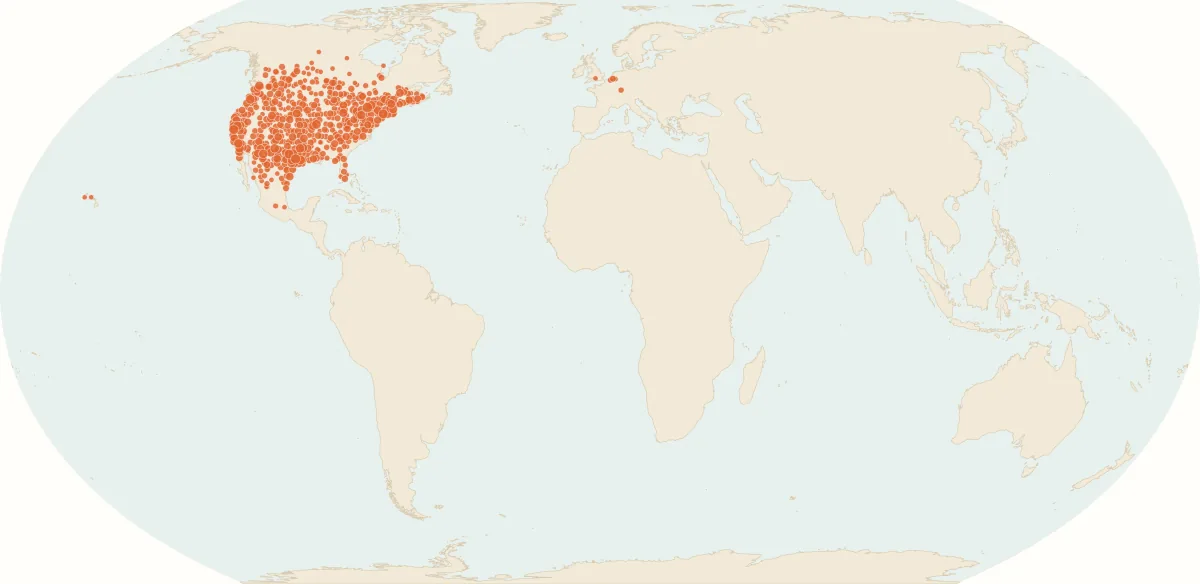
Records: GBIF.org (CC0 and CC BY 4.0 records, retrieved 2026-11-07). Map: Natural EarthSee the records on GBIF
Watch wild animals from a distance. Do not touch or feed them, and take care of the places where they live.
Names around the world
- 日本語
- シマスカンク
- 简体中文
- 加拿大臭鼬
- 繁體中文
- 加拿大臭鼬
- 한국어
- 줄무늬스컹크
- Español
- Mofeta rayada
- Français
- Mouffette rayée
- Deutsch
- Streifenskunk
- Português (Brasil)
- Cangambá
- Italiano
- Moffetta comune
- العربية
- ظربان أمريكي مخطط
- Tiếng Việt
- Chồn hôi sọc
- Русский
- Полосатый скунс
- ไทย
- สกังก์ลายแถบ
Names come from Wikidata and iNaturalist records. Where a language has no recorded name, we use the scientific name.
Sources and how we check
- 上野動物園 — シマスカンクChecked: 2026-11-03
- University of Michigan Animal Diversity Web — Mephitis mephitisChecked: 2026-11-03
- San Diego Zoo — Striped SkunkChecked: 2026-11-06
We check each fact against its source. The illustrations simplify how the real animal looks.
The classification (class, order, family, genus) follows Wikidata records, checked against GBIF. Classifications can change as research goes on.
The basic data are the values given in each source. They vary with how the animal is measured, whether it is male or female, and whether it lives in the wild or in captivity.
This page was translated from the original Japanese with the help of AI.
Report a mistakeWhen you meet the Striped skunk, look for this
- Look for the small triangular head and small ears.
Animals do different things from day to day, so you may not always see this.
San Diego ZooEXHIBIT INFORMATION
Places that keep or show the Striped skunk
Zoos, aquariums and other places whose official websites say they keep or show this animal.
Displays can change with the animals’ health and the seasons. Check each facility’s official website before you go.
RELATIVES
Others in Carnivora


MORE TO MEET


