Common pochard
Amazing fact
The common pochard can also be seen in Tokyo’s sea waters, rivers, and park ponds.
井の頭自然文化園
No sign-up needed. You can save notes on this device.
An illustration based on the real animal.
A little discovery to share.
The common pochard can also be seen in Tokyo’s sea waters, rivers, and park ponds.
THE REAL WORLD
The real Common pochard
- Scientific name
- Aythya ferina
- Japanese name
- ホシハジロ
- Group
- Birds
- Class
- Aves
- Order
- Anseriformes
- Family
- Anatidae
- Genus
- Aythya
It is mostly born in central and eastern Europe, and in winter it flies to warmer places, including Japan.
Males and females have different eye colors: the male's eyes are red and the female's are dark brown.
It dives underwater to eat the stems of water plants growing on the bottom and shellfish living in the mud.
Basic data
- Size
- Total length: about 45 cm
- Diet
- Shellfish living in mud and other animals
- Range
- Japan, Asia, Europe, and North Africa
- Conservation status in Japan
- Near Threatened (NT)Ministry of the Environment of Japan, 5th Red List (2026)
Where the Common pochard has been recorded
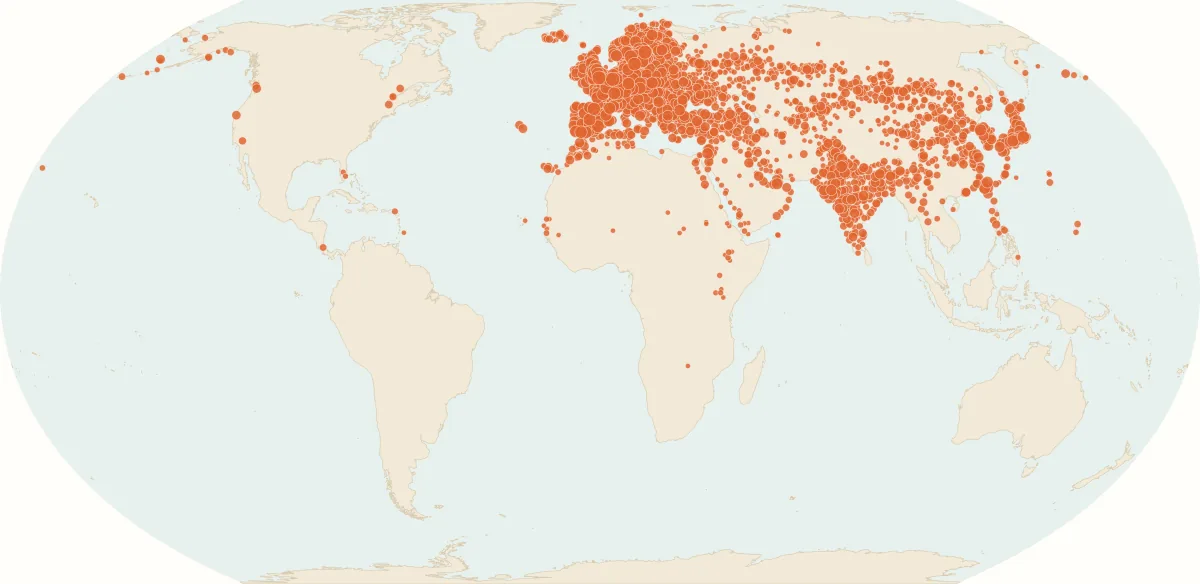
Records: GBIF.org (CC0 and CC BY 4.0 records, retrieved 2026-11-07). Map: Natural EarthSee the records on GBIF
Watch wild animals from a distance. Do not touch or feed them, and take care of the places where they live.
Names around the world
- 日本語
- ホシハジロ
- 简体中文
- 红头潜鸭
- 繁體中文
- 紅頭潛鴨
- 한국어
- 흰죽지
- Español
- Porrón europeo
- Français
- Fuligule milouin
- Deutsch
- Tafelente
- Português (Brasil)
- Zarro-comum
- Italiano
- Moriglione
- العربية
- حمرواي
- Tiếng Việt
- Vịt đầu đỏ
- Русский
- Красноголовый нырок
- Türkçe
- Elmabaş patka
- বাংলা
- পাতি ভুতিহাঁস
Names come from Wikidata and iNaturalist records. Where a language has no recorded name, we use the scientific name.
Sources and how we check
- 井の頭自然文化園 — ホシハジロChecked: 2026-11-03
- Ministry of the Environment of Japan, 5th Red List (2026)Checked: 2026-11-07
We check each fact against its source. The illustrations simplify how the real animal looks.
The classification (class, order, family, genus) follows Wikidata records, checked against GBIF. Classifications can change as research goes on.
The basic data are the values given in each source. They vary with how the animal is measured, whether it is male or female, and whether it lives in the wild or in captivity.
The conservation status in Japan is the category in the Red Lists of the Ministry of the Environment of Japan, which assess the risk of extinction for wild animals in Japan.
This page was translated from the original Japanese with the help of AI.
Report a mistakeRELATIVES
Others in Anatidae


MORE TO MEET


