Sand cat
Amazing fact
Sand cats dig shallow burrows to escape the daytime desert heat.
University of Michigan Animal Diversity Web
No sign-up needed. You can save notes on this device.
An illustration based on the real animal.
A little discovery to share.
Sand cats dig shallow burrows to escape the daytime desert heat.
THE REAL WORLD
The real Sand cat
- Scientific name
- Felis margarita
- Japanese name
- スナネコ
- Group
- Land mammals
- Class
- Mammalia
- Order
- Carnivora
- Family
- Felidae
- Genus
- Felis
A member of the cat family that lives in the deserts of North Africa, Central Asia and Southwest Asia.
It has excellent hearing and finds prey such as mice, snakes and insects by the tiny sounds they make.
How the Sand cat lives
They are generally active at night. When they hear prey underground, they dig quickly to uncover it. They may cover their prey and return later to eat it.
University of Michigan Animal Diversity WebSmithsonian National ZooBasic data
- Diet
- Mice, snakes, insects and others
- Range
- Deserts of North Africa, Central Asia and Southwest Asia
Where the Sand cat has been recorded
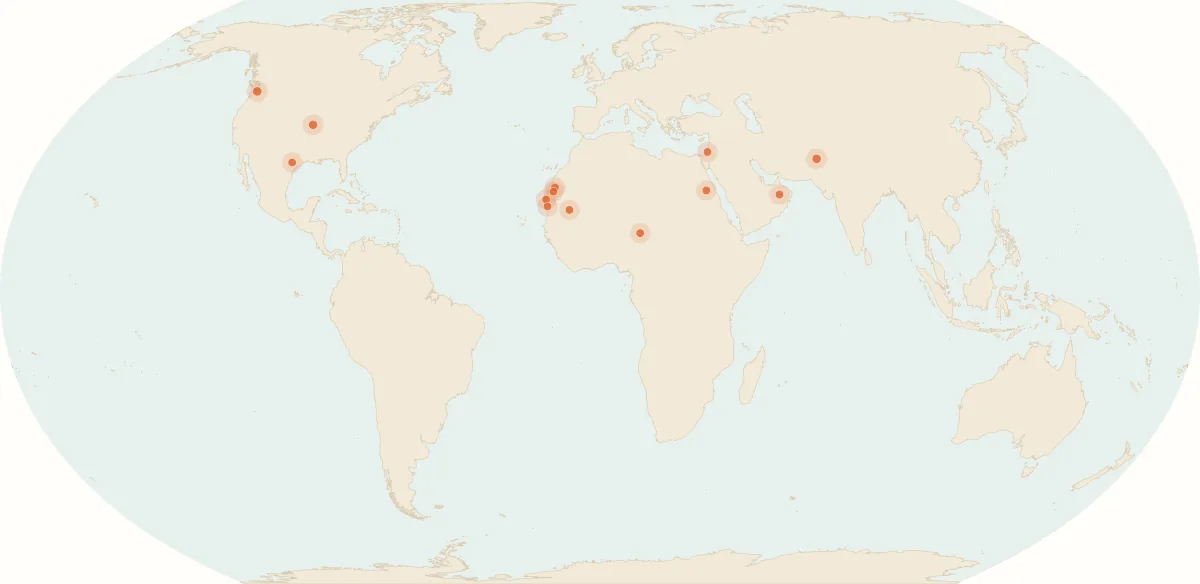
Records: GBIF.org (CC0 and CC BY 4.0 records, retrieved 2026-11-07). Map: Natural EarthSee the records on GBIF
Watch wild animals from a distance. Do not touch or feed them, and take care of the places where they live.
Names around the world
- 日本語
- スナネコ
- 简体中文
- 沙漠猫
- 繁體中文
- 沙漠貓
- 한국어
- 모래고양이
- Español
- Gato de las arenas
- Français
- Chat des sables
- Deutsch
- Sandkatze
- Português (Brasil)
- Gato-do-deserto
- Italiano
- Gatto delle sabbie
- हिन्दी
- रेत बिल्ली
- العربية
- قط الرمال
- Bahasa Indonesia
- Kucing pasir
- Tiếng Việt
- Mèo cát
- Русский
- Барханный кот
- Türkçe
- Kum kedisi
- ไทย
- แมวทราย
- বাংলা
- স্যান্ড ক্যাট
Names come from Wikidata and iNaturalist records. Where a language has no recorded name, we use the scientific name.
Sources and how we check
- 埼玉県こども動物自然公園 — スナネコChecked: 2026-11-03
- University of Michigan Animal Diversity Web — Felis margaritaChecked: 2026-11-03
- Smithsonian National Zoo — Sand catChecked: 2026-11-03
We check each fact against its source. The illustrations simplify how the real animal looks.
The classification (class, order, family, genus) follows Wikidata records, checked against GBIF. Classifications can change as research goes on.
The basic data are the values given in each source. They vary with how the animal is measured, whether it is male or female, and whether it lives in the wild or in captivity.
This page was translated from the original Japanese with the help of AI.
Report a mistakeRELATIVES
Others in Felidae


MORE TO MEET


