Spotted gar
Amazing fact
Spotted gars take in air at the surface and breathe with a swim bladder that works like a lung.
University of Michigan Animal Diversity Web
No sign-up needed. You can save notes on this device.
An illustration based on the real animal.
A little discovery to share.
Spotted gars take in air at the surface and breathe with a swim bladder that works like a lung.
THE REAL WORLD
The real Spotted gar
- Scientific name
- Lepisosteus oculatus
- Japanese name
- スポッテッドガー
- Group
- Freshwater animals
- Order
- Lepisosteiformes
- Family
- Lepisosteidae
- Genus
- Lepisosteus
How the Spotted gar lives
At night they become more active and range farther to search for food. They ambush prey, feeding mainly on aquatic crustaceans such as crayfish. By day they often stay still near fallen trees or brush in the water.
University of Michigan Animal Diversity WebBasic data
- Range
- Texas to western Florida
Where the Spotted gar has been recorded
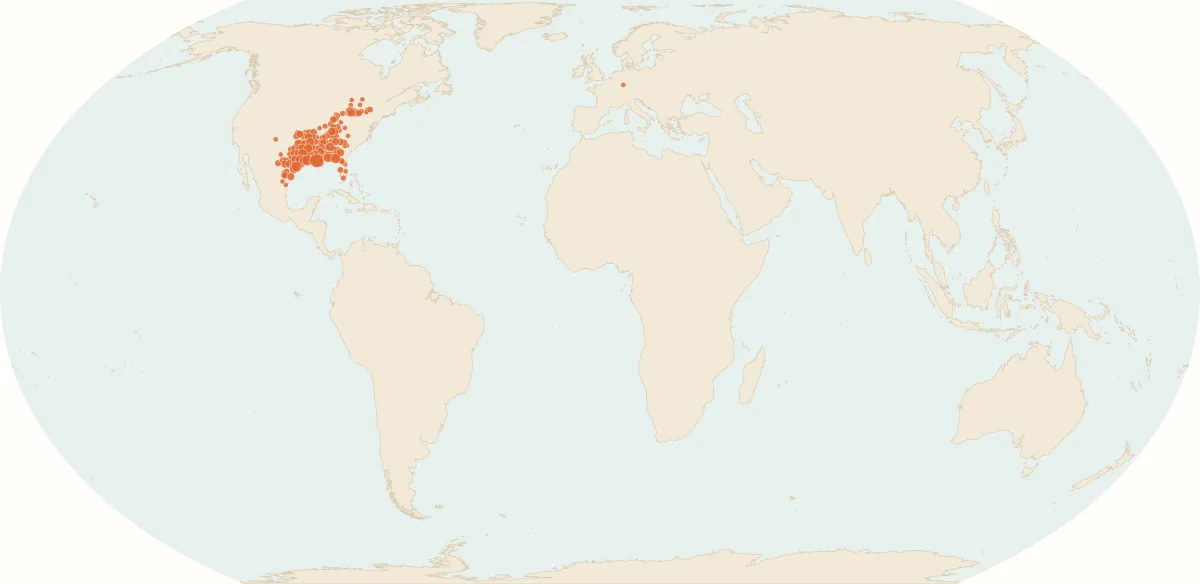
Records: GBIF.org (CC0 and CC BY 4.0 records, retrieved 2026-11-07). Map: Natural EarthSee the records on GBIF
Watch wild animals from a distance. Do not touch or feed them, and take care of the places where they live.
Names around the world
- 日本語
- スポッテッドガー
- 简体中文
- 斑点雀鳝
- 繁體中文
- 斑點雀鱔
- 한국어
- 점박이가아
- Español
- Catán pinto
- Français
- Lépisosté tacheté
- Deutsch
- Gefleckter Knochenhecht
- Português (Brasil)
- Gar-pintado
- Bahasa Indonesia
- Gar totol
- Tiếng Việt
- Cá láng đốm
- Русский
- Пятнистая панцирная щука
Names come from Wikidata and iNaturalist records. Where a language has no recorded name, we use the scientific name.
Sources and how we check
- 鳥羽水族館 — スポッテッドガーChecked: 2026-11-04
- University of Michigan Animal Diversity Web — Lepisosteus oculatusChecked: 2026-11-06
We check each fact against its source. The illustrations simplify how the real animal looks.
The classification (class, order, family, genus) follows Wikidata records, checked against GBIF. Classifications can change as research goes on.
The basic data are the values given in each source. They vary with how the animal is measured, whether it is male or female, and whether it lives in the wild or in captivity.
This page was translated from the original Japanese with the help of AI.
Report a mistakeRELATIVES
Others in Lepisosteidae


MORE TO MEET


