Narrow-ridged finless porpoise
Amazing fact
The narrow-ridged finless porpoise changes from dark gray at birth to light gray all over as it grows.
国立科学博物館 海棲哺乳類データベース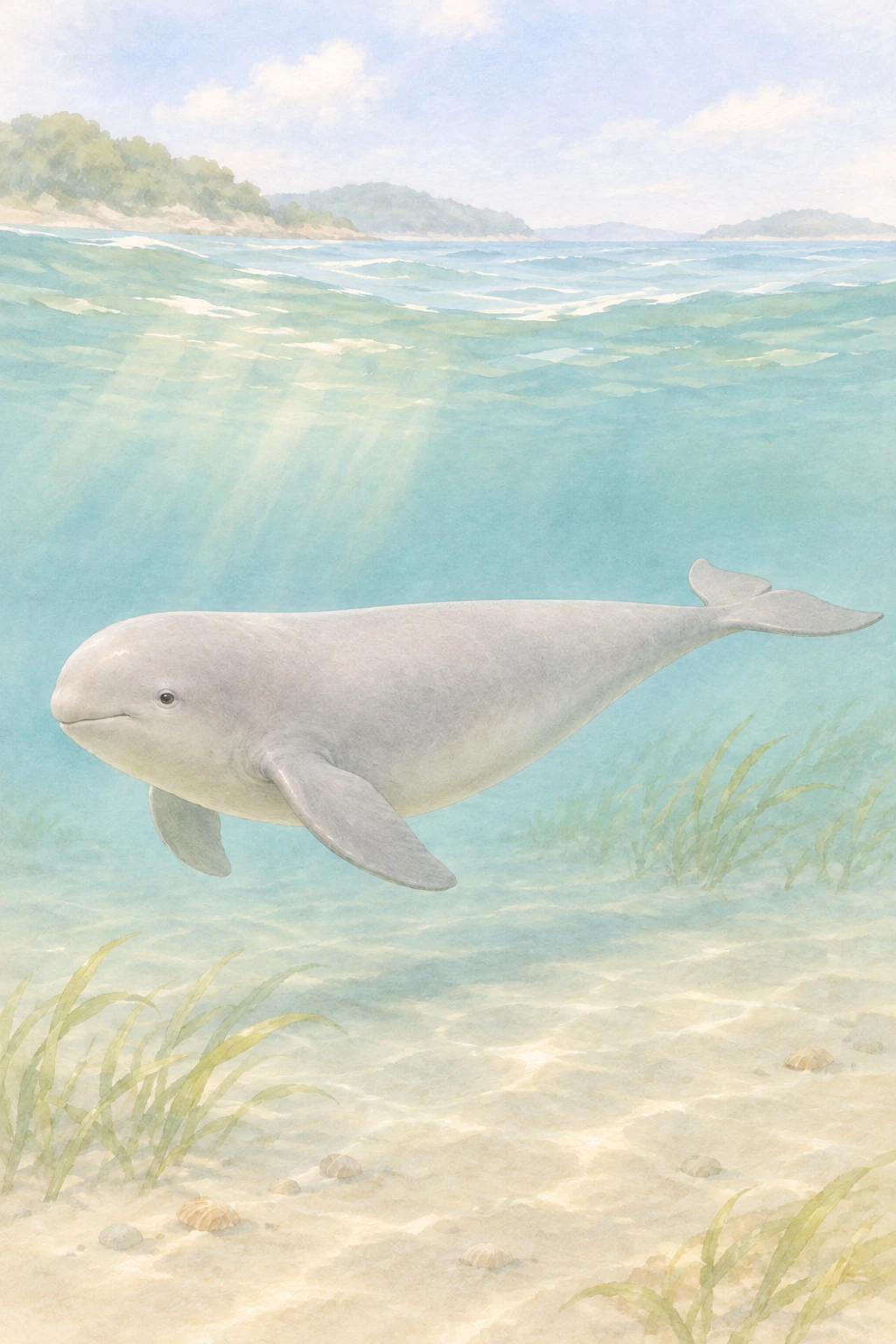
No sign-up needed. You can save notes on this device.
An illustration based on the real animal.
A little discovery to share.
The narrow-ridged finless porpoise changes from dark gray at birth to light gray all over as it grows.
THE REAL WORLD
The real Narrow-ridged finless porpoise
- Scientific name
- Neophocaena asiaeorientalis
- Japanese name
- スナメリ
- Group
- Ocean animals
- Class
- Mammalia
- Order
- Artiodactyla
- Family
- Phocoenidae
- Genus
- Neophocaena
A member of the dolphin and porpoise group that lives along the coasts from China to Japan, even in familiar waters such as Tokyo Bay and Osaka Bay.
Its head is round and it has no beak. It has no dorsal fin either; instead, a raised ridge runs along the middle of its back.
It lives in shallow seas with sandy bottoms, and is seen alone or in small groups.
Basic data
- Size
- 1.4–1.6 m国立科学博物館 海棲哺乳類データベース
- Range
- Coasts from China to Japan鳥羽水族館
Where the Narrow-ridged finless porpoise has been recorded
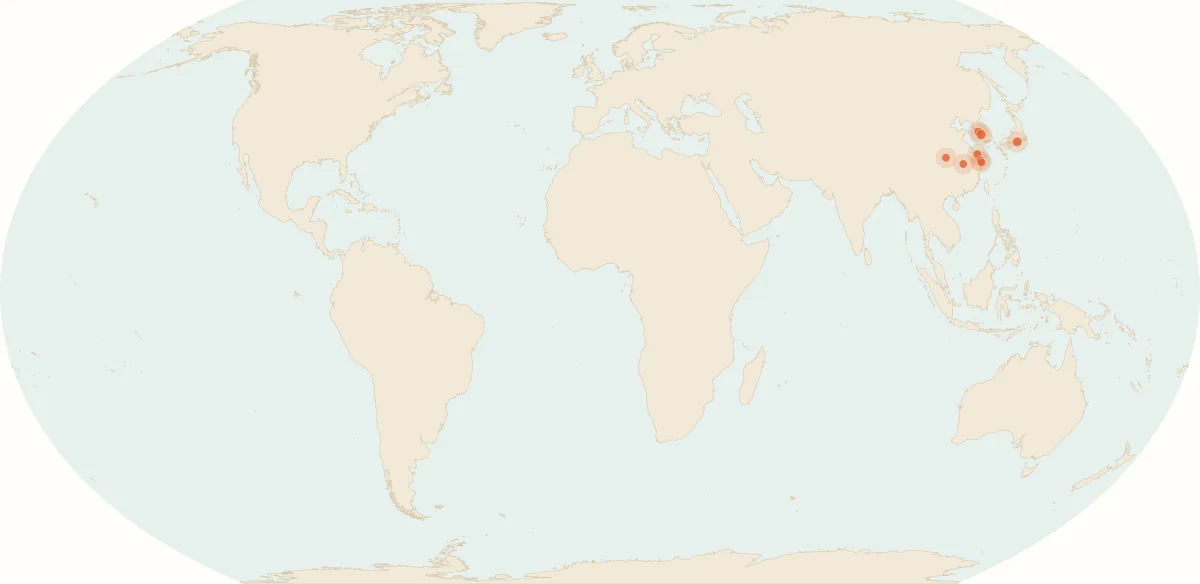
Records: GBIF.org (CC0 and CC BY 4.0 records, retrieved 2026-11-07). Map: Natural EarthSee the records on GBIF
Watch wild animals from a distance. Do not touch or feed them, and take care of the places where they live.
Names around the world
- 日本語
- スナメリ
- 简体中文
- 窄脊新鼠海豚
- 繁體中文
- 窄脊新鼠海豚
- 한국어
- 장강상괭이
- Español
- Marsopa lisa
- Français
- Marsouin sans nageoires
- Deutsch
- Östlicher Glattschweinswal
- Português (Brasil)
- Boto-liso-chinês
- Italiano
- Neofocena dello Yangtze
- Bahasa Indonesia
- Gondal nirsirip Yangtze
Names come from Wikidata and iNaturalist records. Where a language has no recorded name, we use the scientific name.
Sources and how we check
- 鳥羽水族館 — スナメリChecked: 2026-11-03
- 国立科学博物館 海棲哺乳類データベース — スナメリChecked: 2026-11-03
We check each fact against its source. The illustrations simplify how the real animal looks.
The classification (class, order, family, genus) follows Wikidata records, checked against GBIF. Classifications can change as research goes on.
The basic data are the values given in each source. They vary with how the animal is measured, whether it is male or female, and whether it lives in the wild or in captivity.
This page was translated from the original Japanese with the help of AI.
Report a mistakeRELATIVES
Others in Artiodactyla


MORE TO MEET


