Kole tang
Amazing fact
Kole tangs sweep comb-like teeth over the seabed to eat bits of dead organisms.
Quantitative Aquatics, Inc. (FishBase)
No sign-up needed. You can save notes on this device.
An illustration based on the real animal.
A little discovery to share.
Kole tangs sweep comb-like teeth over the seabed to eat bits of dead organisms.
THE REAL WORLD
The real Kole tang
- Scientific name
- Ctenochaetus strigosus
- Japanese name
- コーレタン(キンリンサザナミハギ)
- Group
- Ocean animals
- Order
- Perciformes
- Family
- Acanthuridae
- Genus
- Ctenochaetus
Where the name “Kole tang” comes from
The genus name combines Greek words for comb and hair.
Quantitative Aquatics, Inc. (FishBase)It lives in the tropical waters of the central and western Pacific, from the Izu, Ogasawara and Yaeyama Islands to Samoa and the Marshall Islands.
How the Kole tang lives
It is mainly active during the day. It lives above seabeds of coral, rock and rubble. It usually lives alone. It forms pairs to spawn.
Quantitative Aquatics, Inc. (FishBase)Basic data
- Range
- Izu and Ogasawara Islands, Yaeyama Islands, and tropical central and western Pacific
Where the Kole tang has been recorded
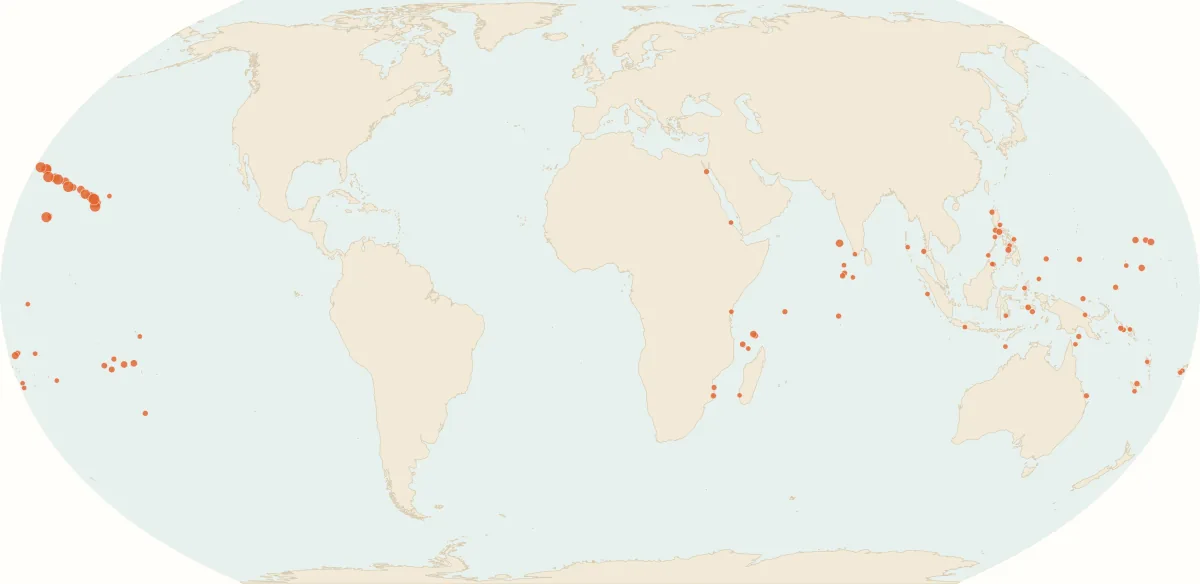
Records: GBIF.org (CC0 and CC BY 4.0 records, retrieved 2026-11-07). Map: Natural EarthSee the records on GBIF
Watch wild animals from a distance. Do not touch or feed them, and take care of the places where they live.
Names around the world
- 简体中文
- 扁体栉齿刺尾鱼
- 繁體中文
- 扁體櫛齒刺尾魚
- Español
- Pez Cirujano Kole
- Português (Brasil)
- Cirurgião-de-olho-dourado
- Italiano
- Pesce chirurgo occhio giallo
- Bahasa Indonesia
- Botana mata kuning
Names come from Wikidata and iNaturalist records. Where a language has no recorded name, we use the scientific name.
Sources and how we check
- 鳥羽水族館 — コーレタン(キンリンサザナミハギ)Checked: 2026-11-04
- Quantitative Aquatics, Inc. (FishBase) — Ctenochaetus strigosus, Spotted surgeonfishChecked: 2026-11-07
We check each fact against its source. The illustrations simplify how the real animal looks.
The classification (class, order, family, genus) follows Wikidata records, checked against GBIF. Classifications can change as research goes on.
The basic data are the values given in each source. They vary with how the animal is measured, whether it is male or female, and whether it lives in the wild or in captivity.
This page was translated from the original Japanese with the help of AI.
Report a mistakeRELATIVES
Others in Acanthuridae


MORE TO MEET


