Giraffe
Amazing fact
Giraffes can see behind themselves and down at their feet without moving their heads.
上野動物園
No sign-up needed. You can save notes on this device.
An illustration based on the real animal.
A little discovery to share.
Giraffes can see behind themselves and down at their feet without moving their heads.
THE REAL WORLD
The real Giraffe
- Scientific name
- Giraffa camelopardalis
- Japanese name
- キリン
- Group
- Land mammals
- Class
- Mammalia
- Order
- Artiodactyla
- Family
- Giraffidae
- Genus
- Giraffa
Where the name “Giraffe” comes from
The scientific name camelopardalis comes from the belief that giraffes were a mix of camel and leopard.
San Diego ZooIt is the tallest animal on land. With its long tongue and flexible upper lip, it pulls leaves from tall trees to eat.
Newborn calves hide in a safe place together with other calves and wait for their mothers to come back from feeding.
How the Giraffe lives
They feed and drink in the morning and evening. Besides leaves, they eat flowers, seed pods and fruits. The members of a herd change as giraffes join and leave. At night they rest standing up and sometimes lie down to sleep.
University of Michigan Animal Diversity WebBasic data
- Weight
- males 1,200 kg, females 830 kg上野動物園
- Lifespan
- up to 25 years in the wild, up to 27 years in captivityUniversity of Michigan Animal Diversity Web
- Active
- By day (diurnal)University of Michigan Animal Diversity Web
- Diet
- Leaves上野動物園
- Range
- Africa south of the Sahara上野動物園
Where the Giraffe has been recorded
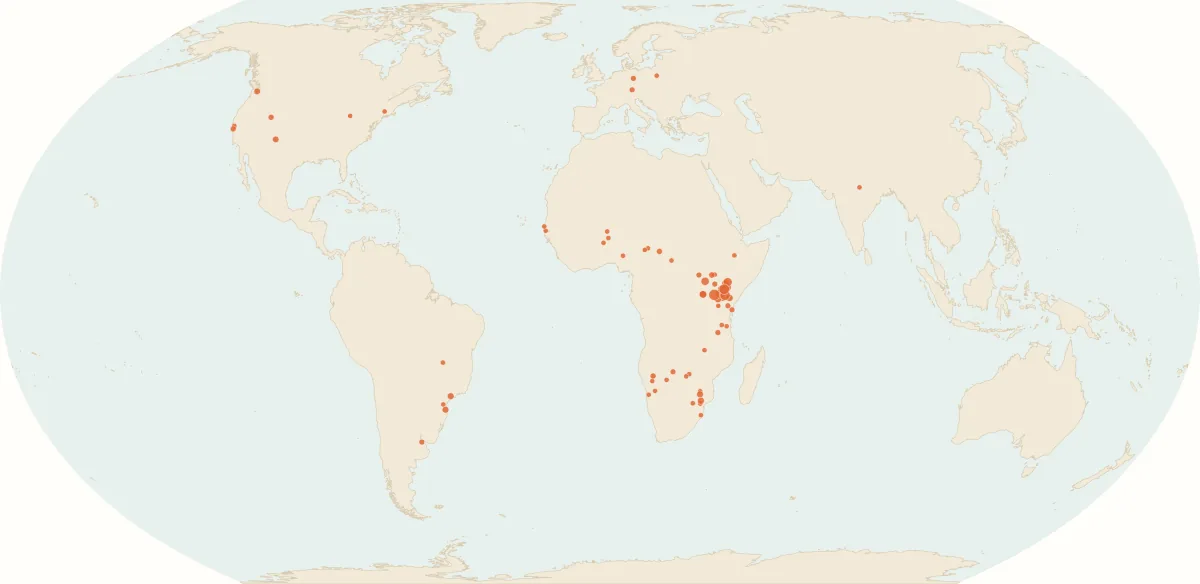
Records: GBIF.org (CC0 and CC BY 4.0 records, retrieved 2026-11-07). Map: Natural EarthSee the records on GBIF
Watch wild animals from a distance. Do not touch or feed them, and take care of the places where they live.
Names around the world
- 日本語
- キリン
- 简体中文
- 努比亚长颈鹿
- 繁體中文
- 努比亞長頸鹿
- 한국어
- 기린
- Español
- Jirafa
- Français
- Girafe
- Deutsch
- Giraffe
- Português (Brasil)
- Girafa
- Italiano
- Giraffa settentrionale
- हिन्दी
- जिराफ़
- العربية
- زرافة
- Bahasa Indonesia
- Jerapah
- Tiếng Việt
- Hươu cao cổ
- Русский
- Жираф
- Türkçe
- Zürafa
- ไทย
- ยีราฟ
- বাংলা
- জিরাফ
- اردو
- زرافہ
Names come from Wikidata and iNaturalist records. Where a language has no recorded name, we use the scientific name.
Sources and how we check
- 上野動物園 — キリンChecked: 2026-11-03
- University of Michigan Animal Diversity Web — Giraffa camelopardalisChecked: 2026-11-03
- San Diego Zoo — GiraffeChecked: 2026-11-06
We check each fact against its source. The illustrations simplify how the real animal looks.
The classification (class, order, family, genus) follows Wikidata records, checked against GBIF. Classifications can change as research goes on.
The basic data are the values given in each source. They vary with how the animal is measured, whether it is male or female, and whether it lives in the wild or in captivity.
This page was translated from the original Japanese with the help of AI.
Report a mistakeWhen you meet the Giraffe, look for this
- Look at the covering of hair on the horns on their heads.
- Watch how the front and back legs on the same side move forward together as they walk.
Animals do different things from day to day, so you may not always see this.
上野動物園San Diego ZooEXHIBIT INFORMATION
Places that keep or show the Giraffe
Zoos, aquariums and other places whose official websites say they keep or show this animal.
Displays can change with the animals’ health and the seasons. Check each facility’s official website before you go.
RELATIVES
Others in Giraffidae

MORE TO MEET


