Dog
Amazing fact
Dogs also convey their mood through chemical signals in scents.
University of Michigan Animal Diversity Web
No sign-up needed. You can save notes on this device.
An illustration based on the real animal.
A little discovery to share.
Dogs also convey their mood through chemical signals in scents.
THE REAL WORLD
The real Dog
- Scientific name
- Canis lupus familiaris
- Japanese name
- イヌ
- Group
- Land mammals
- Class
- Mammalia
- Order
- Carnivora
- Family
- Canidae
- Genus
- Canis
The dog is a domesticated animal descended from the gray wolf.
Its wild ancestor is the gray wolf. Today dogs live alongside people all over the world, in many kinds of places.
Dogs come in a great many shapes and sizes, yet their basic body plan is still that of their ancestor, the wolf.
A dog shows its state of mind through its posture. To invite play, it lowers the front of its body and keeps its rear end up.
How the Dog lives
Feral dogs eat both animals and fruits. They communicate using a variety of vocal sounds. Dogs also form social bonds by touching one another.
University of Michigan Animal Diversity WebWhere the Dog has been recorded
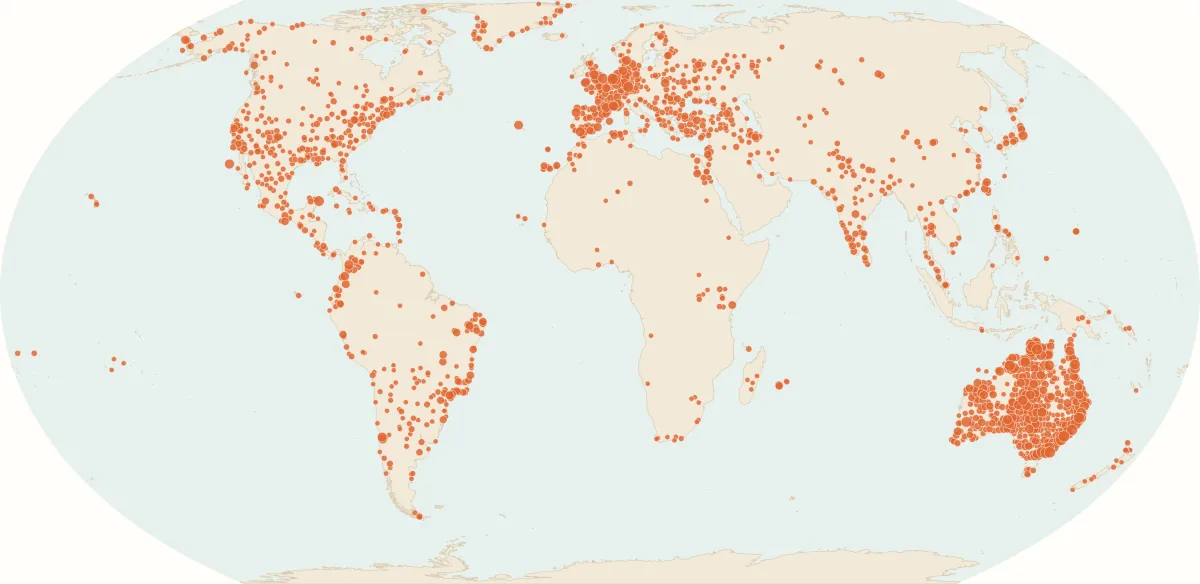
Records: GBIF.org (CC0 and CC BY 4.0 records, retrieved 2026-11-07). Map: Natural EarthSee the records on GBIF
Watch wild animals from a distance. Do not touch or feed them, and take care of the places where they live.
Names around the world
- 日本語
- イヌ
- 简体中文
- 博美犬
- 繁體中文
- 犬
- 한국어
- 개
- Español
- Perro
- Français
- Chien
- Deutsch
- Hund
- Português (Brasil)
- Cão
- Italiano
- Cane
- हिन्दी
- कुत्ता
- العربية
- كلب
- Bahasa Indonesia
- Anjing
- Tiếng Việt
- Chó
- Русский
- Собака
- Türkçe
- Köpek
- ไทย
- สุนัข/หมา
- বাংলা
- কুকুর
Names come from Wikidata and iNaturalist records. Where a language has no recorded name, we use the scientific name.
Sources and how we check
- University of Michigan Animal Diversity Web — Canis lupus familiarisChecked: 2026-11-04
We check each fact against its source. The illustrations simplify how the real animal looks.
The classification (class, order, family, genus) follows Wikidata records, checked against GBIF. Classifications can change as research goes on.
This page was translated from the original Japanese with the help of AI.
Report a mistakeRELATIVES
Others in Canidae


MORE TO MEET


