Lesser emperor
Amazing fact
Lesser emperors are dragonflies that can be seen from spring through autumn.
国土交通省 大隅河川国道事務所
No sign-up needed. You can save notes on this device.
An illustration based on the real animal.
A little discovery to share.
Lesser emperors are dragonflies that can be seen from spring through autumn.
THE REAL WORLD
The real Lesser emperor
- Scientific name
- Anax parthenope
- Japanese name
- ギンヤンマ
- Group
- Insects
- Class
- Insecta
- Order
- Odonata
- Family
- Aeshnidae
- Genus
- Anax
The ginyanma of Japan is treated as a subspecies of this species.
It grows up in ponds, marshes and still parts of rivers with many water plants. Among darner dragonflies, it is one you often see.
The color at the base of the abdomen is different in males and females.
In the darner family the female usually lays eggs on her own, but in this dragonfly the male and female stay joined while laying.
Basic data
- Size
- Body length: 74–82 mm
- Range
- Throughout Japan
Where the Lesser emperor has been recorded
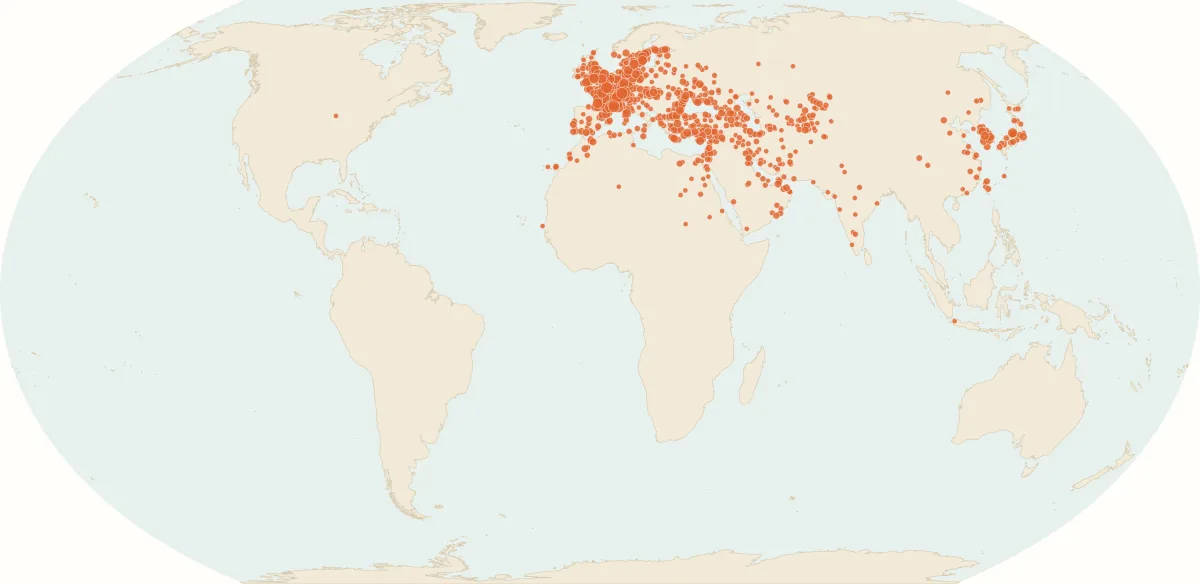
Records: GBIF.org (CC0 and CC BY 4.0 records, retrieved 2026-11-07). Map: Natural EarthSee the records on GBIF
Watch wild animals from a distance. Do not touch or feed them, and take care of the places where they live.
Names around the world
- 日本語
- ギンヤンマ
- 简体中文
- 碧伟蜓
- 繁體中文
- 碧偉蜓
- 한국어
- 왕잠자리
- Español
- Emperador pardo
- Français
- Anax napolitain
- Deutsch
- Kleine Königslibelle
- Português (Brasil)
- Tira-olhos menor
- Italiano
- Imperatore minore
- العربية
- يعسوب الأمبراطور الصغير
- Русский
- Дозорщик темнолобый
- Türkçe
- Küçük Kral Yusufçuk
Names come from Wikidata and iNaturalist records. Where a language has no recorded name, we use the scientific name.
Sources and how we check
- 国土交通省 大隅河川国道事務所 — 肝属川の昆虫 ギンヤンマChecked: 2026-11-03
- 守山市 — 美崎公園とその周辺の自然(トンボのなかま・ヤンマ)Checked: 2026-11-04
We check each fact against its source. The illustrations simplify how the real animal looks.
The classification (class, order, family, genus) follows Wikidata records, checked against GBIF. Classifications can change as research goes on.
The basic data are the values given in each source. They vary with how the animal is measured, whether it is male or female, and whether it lives in the wild or in captivity.
This page was translated from the original Japanese with the help of AI.
Report a mistakeRELATIVES
Others in Odonata


MORE TO MEET


